MOK

Kalve Coffee Roasters

We’re happy to introduce Kalve Coffee Roasters from Lat via, founded by Gatis and Raimonds with the idea that great coffee should be accessible to ever yone, from newcomers to seasoned enthusiasts. They have a roaster y outside Riga and coffee shops in Riga, Tallinn, Vilnius, and Paris.

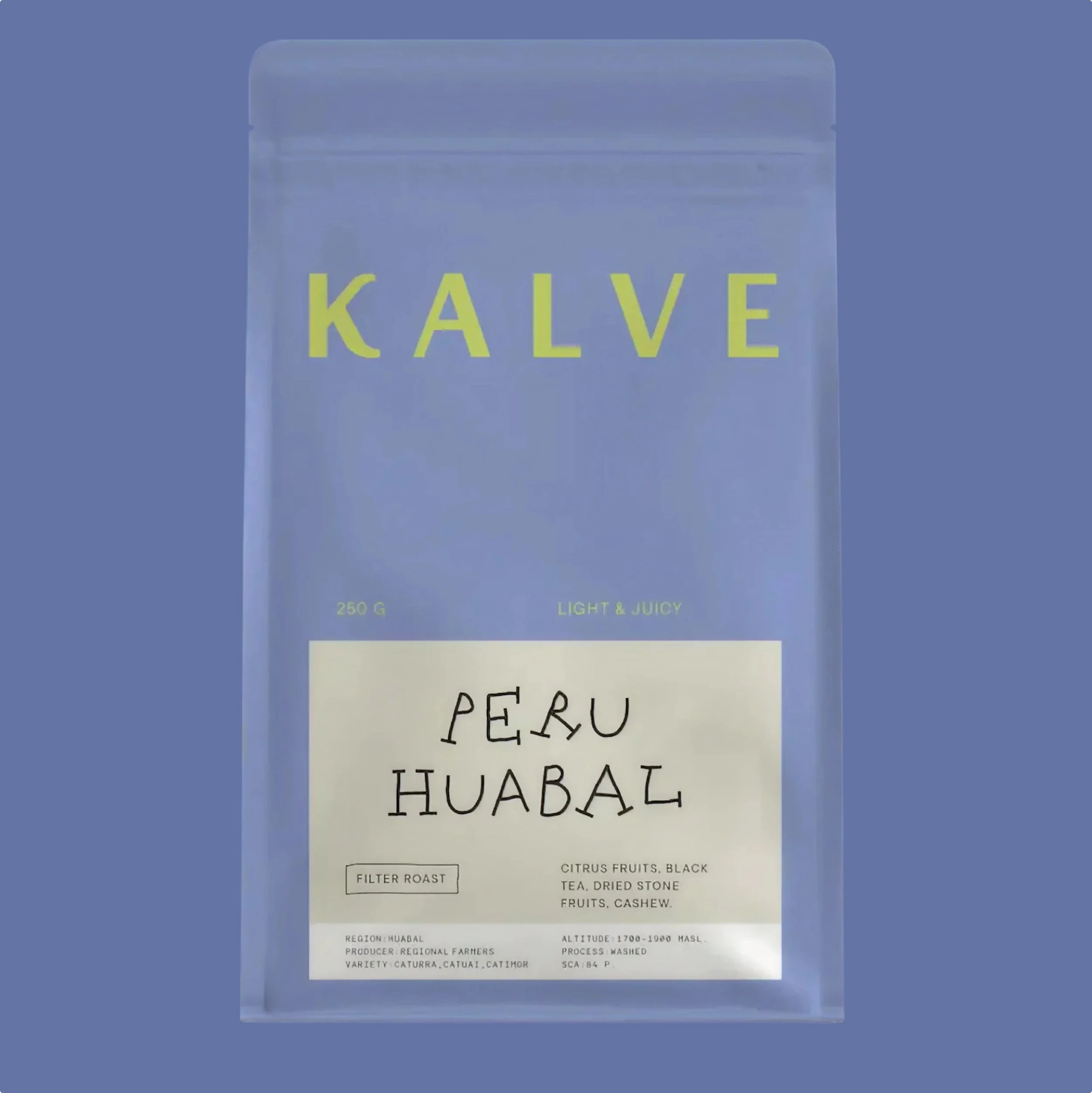
HUABAL

Origin: Peru

From the Jaén province of Cajamarca, this lot blends coffees from multiple smallholder farmers in Huabal. The district spans several mountain ranges with varied climates and soils, from humid red earth to drier, hotter areas, creating complex, distinctive cups. After harvest, the coffee rests for 24 hours, is fermented for 36 hours, and is dried on lined patios for 10 to 15 days.

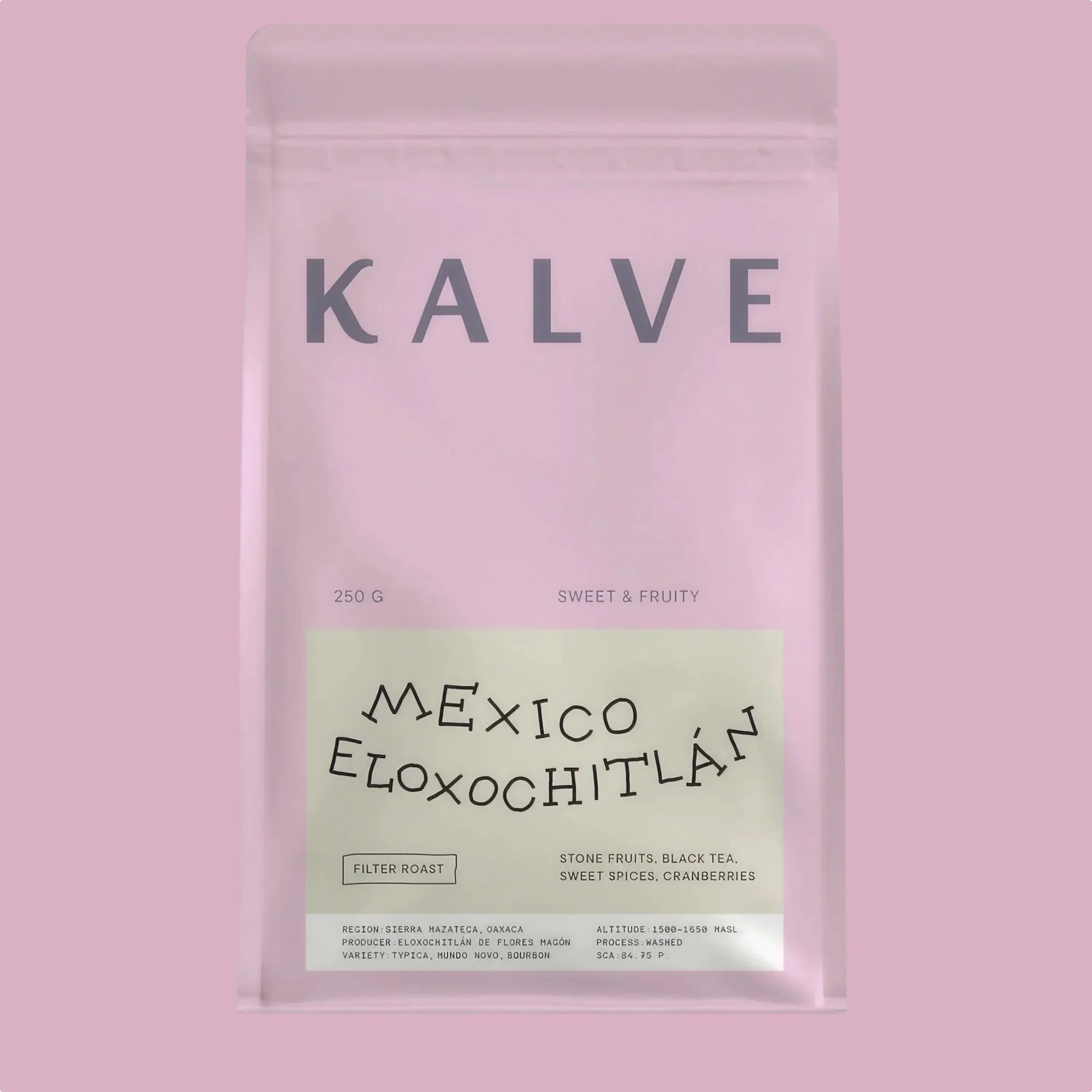
ELOXOCHITLÁN

Origin: Mexico

From the remote Sierra Mazateca, a steep, dramatic, and hard-to-reach region. The high altitude and cold nights make frost a risk but also contribute to exceptional quality. Coffees here are among the most complex in Mexico. Most producers harvest less than one bag per year, pulping by hand, fermenting for 48 hours in wooden tanks, and drying on petates, traditional hand-woven mats.

LOS PIRINEOS

Origin: El Salvador

From fifth-generation producer Diego Baraona, whose family has grown coffee for over 130 years. The farm sits on the slopes of a standalone volcano, where sun-filled days and cool breezes create an ideal microclimate. This lot is named "Elite" after the farm's 90-year-old Bourbon trees, a tribute given by Diego's father to honour their heritage.

Explore Europe’s best roasters!

MOK in the final box of 2025

For December’s box we’re excited to welcome MOK from Brussels, Belgium. Founded in 2012 by two-time Belgian Cup Tasters Champion Jens Crabbé, they roast with a pure, uncompromising focus on quality and traceability, returning to the same farmers year after year. Each coffee is roasted to highlight clarity, sweetness, and character.

FINCA BETANIA

Origin: Colombia
Producer: Linarco Rodríguez
Process: Washed
Varieties: Pink Bourbon
Tasting notes: Mandarin & Gingerbread

Finca Betania is located in southern Huila, Colombia, where Linarco Rodríguez farms at 1700 masl and leads Café Origen Palestina, a cooperative of 117 producers focused on sustainable, traditional methods. This washed Pink Bourbon lot shows the care behind it, handpicked at full ripeness, depulped, then fermented anaerobically for 32 hours. After a slow 25-day dry, it lands clean and quietly complex in the cup.

MUGAYA AA

Origin: Kenya
Producer: Mugaya Factory
Process: Washed
Varieties: Ruiru 11, SL28, SL34, Batian
Tasting notes: Orange blossom & Toffee

Mugaya AA comes from Mugaya Coffee Factory, part of the Mutira Farmers’ Cooperative Society in Kenya’s Kirinyaga highlands, near Kagumo town and the slopes of Mount Kenya. Around 1,700 smallholders deliver ripe cherries, then the factory takes it from there with careful sorting, pulping, and 24 hours of dry fermentation. After a clean wash, a six-hour soak, and up to two weeks on raised beds, it drinks bright and expressive, with that classic Kirinyaga clarity.

SASABA

Origin: Ethiopia
Producer: Sasaba Washing Station
Process: Washed
Varieties: Heirloom
Tasting notes: Citrus & Milk chocolate

Sasaba caught MOK’s attention in early 2024 for its bright, lively character, and this year’s lot keeps that same high standard. It comes from Sasaba Washing Station, founded by Tsegay Hagos Tesfaye in Kercha, Guji, working with 500+ smallholders farming above 2000 masl. Fully ripe cherries are delivered for 48 to 72 hours of fermentation, then dried 7 to 8 days on raised beds. A bright coffee with crisp citrus-like acidity.

Explore Europe’s best roasters!

MOK 2019

2019 has been a year full of delicious coffees, working with extremely talented coffee roasters. We wanted to finish up the year on top. We’re happy to introduce Belgian roaster MOK for our December’s box.

mok-logo.png

Founder of MOK, Jens Crabbé, opened his coffee shop and roastery in Leuven in 2012. Always knowing he wanted to start his own thing, this let him develop his own approach and create his own vision. We had the chance to ask Jens a few questions!

- What is the coffee scene like in Leuven and Brussels?

Our shop in Leuven grew every year since we have started back in 2012 so this must mean the specialty coffee scene and audience is still growing. On the other hand there’s only a hand full of actual specialty coffee places and most other are still riding the more commercial wave to be honest. I feel we have really created a nice coffee community which was obvious when we hosted the Aeropress semi finals this year with 40 people competing. Brussels on the other hand is (finally!) expanding fast in terms of hospitality in general, not only coffee shops but natural wine and fine dining places are popping up everywhere... I’m moving to Bxl soon! :D

mok-specialty-roastery-2.JPG
mok-specialty-roastery-1.jpg

- Where do you see yourselves in 5 years?

The next big step for MOK is moving the roastery to Brussels, apart from being a roastery we will add a nice extra to the space as well., keep an eye on our social media for more details soon! After this i’m not sure where my ambition will take us but I definitely don’t want to become a chain or sell the brand to Nestle haha ;) Quality and Integrity are key and I will keep focusing on this, trying to be the best possible MOK we can be.

- Do you have a brewing recipe that you would like to share?

I must say I like to keep my brews as simple as possible, only for competitions I tend to go for a more complex approach but this hardly ever pays off. On the other hand competitions are super interesting to push your abilities and skills and learn from your mistakes. My advise for brewing is to keep things simple and focus on the most important factors: a good grind and water. We like to brew with SPA which always gives a great mouthfeel and freshness to the brew also people visiting our shop are allowed to fill up there bottle of our brewing water (reversed osmosis +-60ppm) to brew at home! For the brewing; try to make the pouring routine and timing easy to repeat and focus on pouring technique and achieving a “flatbed”.

- Many of our subscribers are tasting MOK for the first time. What can we expect from the three coffees (Mr Tessema Edima, Mr Basha Bekele and San Antonio de Esquipulas)?

We decided to enter the subscription with 3 different processing methods; washed, honey and natural as we believe these coffees are great examples of these processing methods.

Tessema is in my opinion a typical Yirgacheffe, super floral bursting with citrus flavours. We clearly find jasmine in the aroma and bergamot and black tea flavours. Try cupping this coffee before you start brewing to get a good reference of what a good brew could taste like!

San Antonio is a bit more easy going but very satisfying and forgiving, water is a bit less important to make great brews as it will always have a nice body and sweetness, we mainly taste chestnut and chocolate and that typical honey-process kind off acidity.

Basha Bekele; probably one of our most successful coffees of the (last) year! Bursting with ripe fruit flavours and floral notes and has that right amount of funkiness that keeps you coming for more.


What coffee's did we send from MOK?


Mr Tessema Edima
Origin: Ethiopia, Yirgacheffe
Process: Washed
Altitude: 1950-2150 MASL
Varieties: Kurume
Tasting notes: Peach, lavender, black tea

This is the second year MOK buys coffee from Mr Tessema Edima. For this year, Tessema introduced a 72h fermentation, putting the depulped cherries in a tank under full immersion with renewed water every 24hrs. This process make sure the complete mucilage is removed during fermentation. With precision and quality control, this resulted in an incredibly clean & aromatic coffee with notes of peach, lavender and black tea.


San Antonio de Esquipulas
Origin: Guatemala, San Antonio de Esquipulas
Process: Honey
Altitude: 2000+ MASL
Varieties: 70% bourbon 30% caturra
Tasting notes: chocolate, chestnut, golden raisin.

Due to the migration of workers, producer Jorge had to rely on 1/4 of his usual workforce this harvest. Supported by Anacafe, he explored different possibilities to find out if he could produce a honey processed coffee using mechanical drying. The coffee was spread across static dryers and over 2 days a combination of airflow, heat, movement & rest were repeated. This coffee includes both bourbon and caturra varieties and has notes of chocolate, chestnut and golden raisin.


And exclusive to our Tasting box subscribers 👏


Mr Basha Bekele
Origin: Ethiopia, Sidama
Process: Natural
Altitude: 1950-2000 MASL
Varieties: 74160
Tasting notes: Pomegranate, black tea, lime

With new export laws in Ethiopia, small producers are now able to market their coffee themselves. MOK’s importer Falcon has begun a funding and education initiative that pre-finances export and teaches families like Basha’s how to improve their farming and processing techniques. Basha and his wife own three hectares where they grow the 74160 variety, known to have very pronounced citrus and floral notes. This coffee has flavours of pomegranate, black tea and lime.


Join our coffee community. Become a member!